

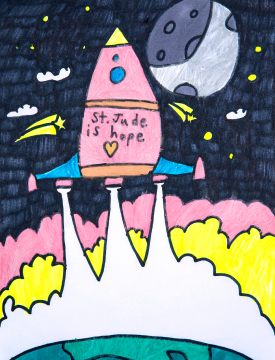
In 1962, the same year an American orbited the Earth for the first time, a hospital opened in Memphis, Tenn., determined to deliver on an equally bold goal: finding cures for kids with cancer and other life-threatening diseases, regardless of their race, ethnicity, beliefs or a family’s ability to pay.
Treatments invented at St. Jude have helped push the overall childhood cancer survival rate in the United States from 20 percent to more than 80 percent. However, in many developing countries fewer than one in five children with cancer will live. The single most significant predictor of whether a child with cancer will survive is where he lives. St. Jude is working to change that; our goal is to cure at least 60% of children with six of the most common kinds of cancer worldwide by 2030.

Close to 90 percent of children with cancer live in low- and middle-income countries where they often lack access to adequate diagnosis and treatment. St. Jude is working with the World Health Organization (WHO) and other global health leaders to improve detection and treatment of childhood cancer around the globe, because we want kids everywhere to have access to quality care, regardless of the country they live in.

Close to 90 percent of children with cancer live in low- and middle-income countries where they often lack access to adequate diagnosis and treatment. St. Jude is working with the World Health Organization (WHO) and other global health leaders to improve detection and treatment of childhood cancer around the globe, because we want kids everywhere to have access to quality care, regardless of the country they live in.

Just as the Polaris Dawn mission expanded our understanding of what’s possible in human spaceflight, St. Jude will continue to strive here on Earth to improve global survival rates for childhood cancer. Together, we can build a brighter future for the generations to come.